
Fighting the wildfire: Highlands communities and frontline defenders are stopping sorcery-accusation related violence
Sorcery accusation related violence (SARV) remains one of the most serious human rights challenges in Papua New Guinea, particularly in the Highlands.
At the Fighting the Wildfire: Communities Against SARV event held in Goroka, SARV Frontliners met provincial and district leaders to highlight the role of community in stopping SARV, and to access important information and resources.
While media coverage often portrays communities as complicit or powerless, new research and case data tell a different story: when community leaders are informed, supported and resourced, they can and do stop SARV.
Ms Mary Kini, Director of the Highlands Women Human Rights Defenders Movement, says that the experience of those on the frontline need further resources to help fight the fight against SARV.
“The frontline organisations have decades of experience. We have trained and supported a network of community focal points and leaders across the Highlands to be early warning systems,” Ms Kini said.
“They have a pivotal role in stopping violence. We are calling on government to give frontline organisations the resources we need to scale up this vital work and stop SARV in every community.”
The ability of government and community leaders to stop SARV has been powerfully demonstrated in Hela Province in recent months. After a rapid rise in SARV cases over 2024 and 2025, the Rural Women’s Development Foundation worked with police, government and community leaders to arrest SARV perpetrators, communicate the laws against SARV and organise a regional SARV leaders summit. These efforts resulted in zero cases of SARV being reported in December.
The event launched two landmark publications produced by the Highlands SARV Movement: Papua New Guinea’s first practice note on “do no harm” approaches to SARV response; and a summary of the frontline defenders’ research and case data on SARV in the Highlands. These reports underline the essential role of community leaders in fighting the SARV wildfire, and of frontline organisations in training and supporting these brave individuals to act.
Together, the findings show that SARV is deeply rooted in community dynamics, and that effective responses must be community-led and frontliner-facilitated. Provincial and district authorities play a critical role when they back these efforts with practical support, including funding for frontline responders, safe houses, coordination committees, and police Rapid Response Teams.
Communities are the solution says Ms. Kini.
“When leaders, including ward councillors, are trained, supported and empowered, violence can be prevented. This event is about recognising courage and ensuring it is backed by real resources. We have a clear message to communities, leaders and the whole nation: SARV can be stopped,” she said.
The Highlands SARV Movement is made up of Highlands Women Human Rights Defenders Movement (regional), Kafe Urban Settlers Women’s Association (Eastern Highlands province), Kup Women for Peace (Simbu province), Voice for Change (Jiwaka province) and Rural Women’s Development Foundation (Hela province). The Highlands SARV Movement is supported by the PNG-Australia Partnership.
ENDS
Notes to editors
The two Highlands SARV Movement reports can be downloaded here:
http://www.highlandssarvmovement.org
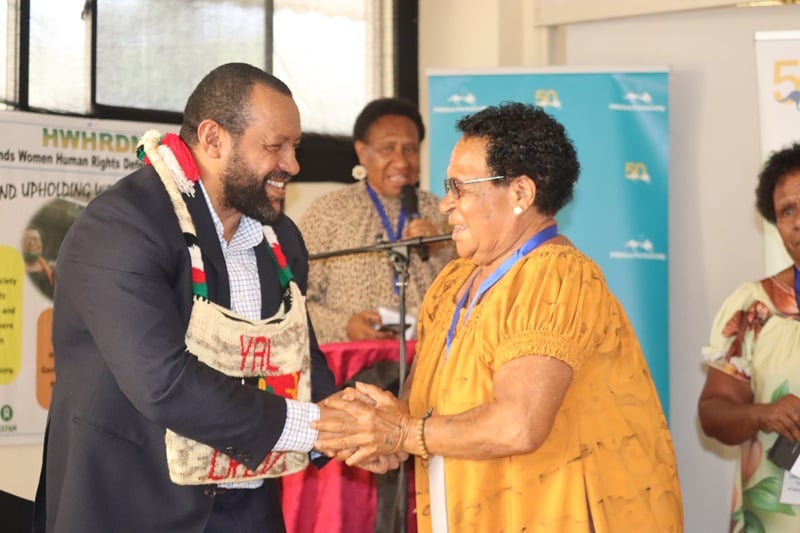
Hon. James Nomane, Opposition Leader Member for Chuave receiving the SARV Data Report from Angela Apa, Director for Kup Women for Peace (KWP).
For further information, including access to related materials, please contact the Australian High Commission media team: +675 7090 0100