
On my first official visit to Papua New Guinea as Australia’s Ambassador for Global Health, I was reminded that how nations manage public health is not an abstract concept discussed only in conference rooms. It is lived every day in clinics, hospitals, and communities, and is built on partnerships grounded in trust, respect, and shared responsibility.
This week centered on listening. In meetings with senior health officials in Port Moresby, provincial health leaders, researchers, and frontline workers, one message came through clearly: progress is possible, but only through sustained collaboration that matches high-level ambition with practical, local delivery.
Australia and Papua New Guinea are more than just neighbours; our health security is deeply intertwined. Diseases do not respect borders, and neither can our responses. That reality underpins Australia’s longstanding commitment to supporting PNG’s efforts to tackle the region’s most pressing health challenges, particularly tuberculosis (TB), HIV/AIDS, and malaria. Australia is proud to support PNG not only through programs on the ground and technical assistance, but also by advocating for Pacific perspectives in global health decision-making bodies.
Tuberculosis remains one of PNG’s most serious health burdens and a leading cause of infectious death. In Port Moresby I met clinicians delivering newly introduced shorter, six-month, treatments for drug-resistant TB that are more effective, easier for patients to complete, and vital for reducing community transmission.
These advances are the result of years of partnership and collaboration. Australian investment in research & development to make these drugs commercially viable, strong advocacy by Australia through global institutions like the Global Fund to ensure PNG is prioritised, and PNG leadership in adopting new tools on the ground, have all contributed to better outcomes for individuals and communities. Our continued focus must now be on scaling these treatments and strengthening the diagnostic networks that find missing cases before they spread.
The HIV epidemic presents a different but equally urgent challenge. PNG’s declaration of a national HIV emergency last year reflects both rising infections and a more robust testing regime that is finally revealing the true scale of the crisis.
During my visit, I saw firsthand in Port Moresby and in Goroka the power of community-led and faith-based services providing stigma-free testing and treatment, often delivered in the most difficult circumstances. Australia has stepped up its support, working alongside the Government of PNG to expand outreach and protect the most vulnerable, particularly women and girls. However, we are realistic about the hurdles. A sustainable response depends on national leadership, seamless coordination across partners, and long-term investment in health systems that can keep pace with growing demand.
Malaria remains a persistent threat, made more complex by a changing climate that is expanding mosquito habitats across the Pacific. Australia’s support is aimed at helping PNG move from control toward the ambitious goal of elimination. We must ensure that the hard-won gains of the last decade are not reversed by environmental shifts. I appreciated hearing directly from expert local researchers at the PNG Institute of Medical Research in Goroka – which benefits from substantial Australian support - on their efforts to drive local innovations to tackle malaria and other pressing challenges, including cervical cancer.
Australian support is aligned with PNG’s own National Health Plan and seeks to help PNG to achieve its vision of bringing health services closer to people’s home. I was delighted to visit Metoreia health centre, the construction of which was funded by Australia, and which is supporting a population of 40,000 people including by providing essential maternity and birthing services. The need for these services was also driven home to me while visiting the Waniati Maternal Waiting Home in Eastern Highlands Province, where Australian volunteers are working alongside inspiring PNG volunteers to help women give birth safely.
What struck me most throughout this visit was the expertise of PNG’s health workforce. From the Highlands to the islands, there is a wealth of locally led solutions waiting for the right backing. Our role as a partner is to invest in the people and institutions that deliver results – side by side and step by step.
No country can solve complex health challenges such as TB, HIV, or malaria in isolation. But together, through practical partnership and a shared resolve to strengthen our region, Australia and Papua New Guinea are making progress that matters.
Yumi stap wantaim.
ENDS
Background:
As Ambassador for Global Health, Mr Cannan leads Australia's international engagement to strengthen health security and promote equity and resilience, with a particular focus on the needs of our region. Working with our neighbours and global partners on health helps protect Australia and our region from disease outbreaks, which is essential to stability and prosperity in the Indo-Pacific. Mr Cannan is a senior career officer in the Department of Foreign Affairs and Trade. He leads the department's Global Health Division, which oversees much of Australia's international development assistance in health and manages Australia's relationships with multilateral health organisations. Mr Cannan has previously served as Australia's Ambassador to Israel and has held a range of other senior roles in the department, including responsibility for Australia's investments in global health funds. Earlier in his career, he worked with the Global Fund to Fight AIDS, Tuberculosis and Malaria.
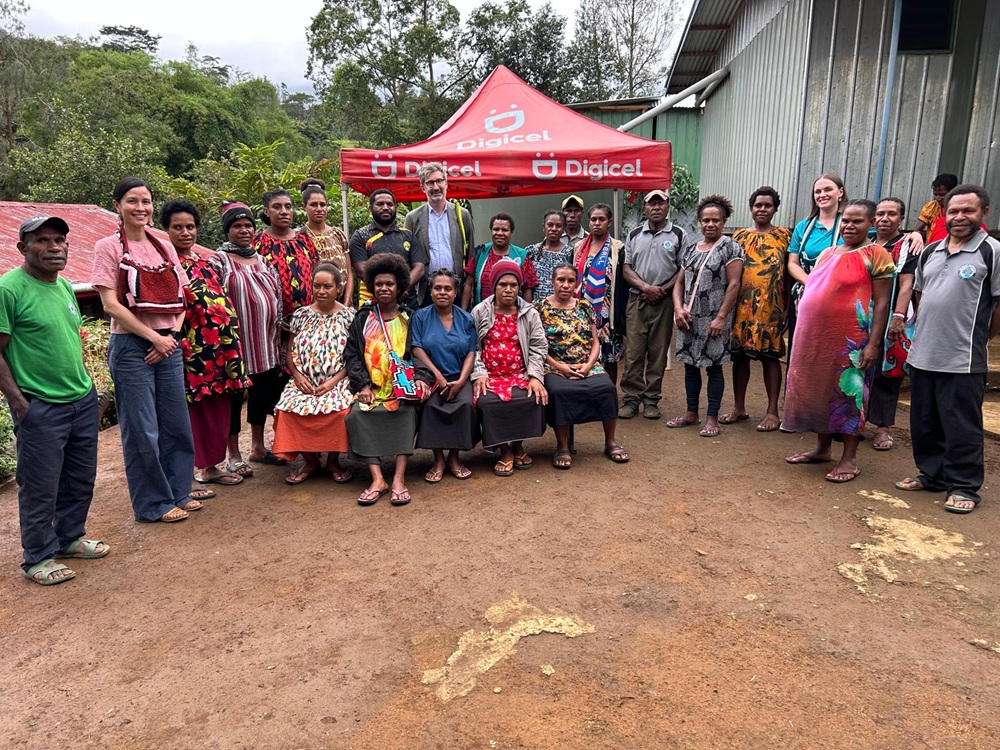
Australia’s Ambassador for Global Health, Chris Cannan, visits Waniati Maternal Waiting Home in Eastern Highlands Province, established by an Australia Awards alumni in midwifery and now benefitting from ongoing support from Australian Volunteers.
For further information, including access to related materials, please contact the Australian High Commission media team: +675 7090 0100