
Australia and PNG are working together to ensure that women and girls are not only accessing education but thriving within the school environment. By strengthening the skills, confidence and leadership of female teachers, schools become safer, more supportive places for girls to learn.
Educating women and girls is one of the most powerful ways to strengthen communities, improve livelihoods and shape a more inclusive future for Papua New Guinea, particularly in rural and remote areas where opportunities may be limited.
Female teachers play a critical role in shaping the experiences of girls in the classroom. As trusted mentors and role models, they encourage girls to stay engaged in school, build confidence in their abilities, and imagine futures that extend beyond traditional expectations.
When women are empowered as educators, their influence reaches far beyond school walls by supporting families, guiding young people and strengthening community resilience.
Across Papua New Guinea, women teachers are taking part in professional development and in-service training under the Partnerships for Improving Education (PIE) program, strengthening literacy, numeracy and inclusive classroom practice.
Many of these teachers work in rural and remote communities, where access to training has historically been limited and where strong teaching has the greatest potential to change outcomes for children.
In these communities, improved teaching practice directly supports better learning outcomes for students, especially girls, who face greater barriers to staying in school. With more confident and well-trained female teachers in classrooms, girls are more likely to see education as achievable, relevant and worth pursuing.
Mrs Sibona Badira, teacher-in-charge at Gabagaba Elementary School in Central Province, says investing in teachers is essential to supporting girls’ education and national development.
“Girls’ education is paramount for the nation’s progress, and teachers need training and professional development to teach effectively. I am grateful towards Australia for the training that has strengthened my teaching skills and enhanced my confidence as a teacher. It has brought me great satisfaction in my role,” she said.
Australia continues to work in partnership with PNG to strengthen education systems, support female teachers and expand opportunities for girls by recognising that when women and girls are educated, communities are stronger, more resilient and better equipped for the future.
End
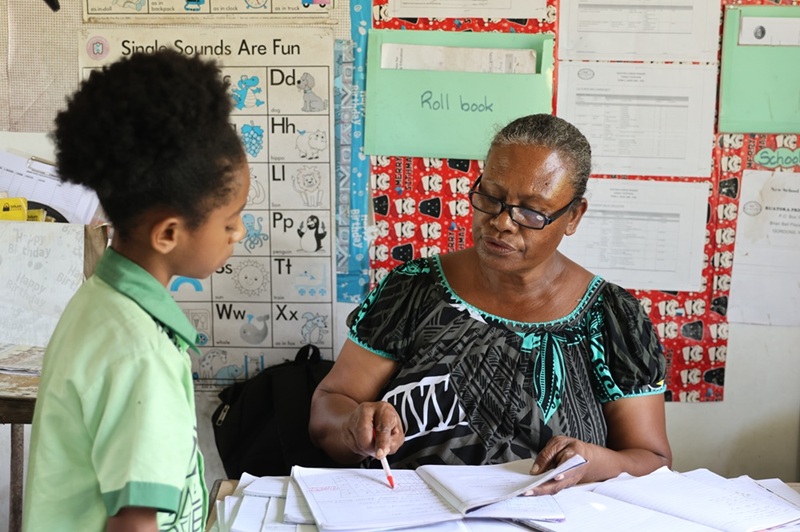
Women and girls’ education is one of the most powerful drivers of social, economic and community development.
For further information, including access to related materials, please contact the Australian High Commission media team: +675 7090 0100