
Australia has reaffirmed its commitment to supporting accessible, inclusive and quality health services in Papua New Guinea.
This is following a recent Learning and Reflection Workshop for the Partnering for Strong Families project.
The workshop brought together representatives from the National Department of Health (NDoH), Provincial Health Authorities, Marie Stopes PNG, the Australian High Commission, and key partners to reflect on five years of work to strengthen family planning and reproductive health services across Papua New Guinea.
Implemented by Marie Stopes International, with support from the Australian Government, Partnering for Strong Families has worked across nine provinces to improve access to family planning and sexual and reproductive health services, particularly for women, adolescents, people with disabilities and survivors of gender-based violence.
The workshop provided an important opportunity for national and provincial stakeholders to review progress, capture lessons, and identify practical approaches to sustain stronger family health services beyond the life of the project.
Discussions focused on how partnerships between the NDoH, Provincial Health Authorities and service delivery partners can continue to strengthen provincial systems, support frontline health workers and improve access to services for communities that face barriers to care.
Key sessions also explored findings from innovative work under the project, including a recent disability data pilot. This work helps partners better understand how health services can be more inclusive and responsive to the needs of people with disabilities.
Provincial Family Health Coordinators played a central role in the workshop. Their day-to-day experience overseeing family health services at the provincial level ensured discussions were grounded in operational realities and local priorities.
Family Health Coordinator at Morobe Provincial Health Authority, Sr. Patricia Mitiel, said the workshop was an important opportunity to bring provincial experience into future planning.
“At a provincial level, we see how access to family planning can support healthier mothers, stronger families and more resilient communities. This workshop has helped bring provincial experience into the discussion, so future planning is practical, locally led and focused on the needs of the people we serve.”
Their day-to-day experience overseeing family health services at the provincial level ensured discussions were grounded in operational realities and local priorities.
Their participation will help ensure lessons from the project remain practical, locally owned and relevant to future planning by Provincial Health Authorities.
Australia remains a steadfast partner for a safer and healthier PNG, supporting efforts to ensure health services are within reach for every citizen.
END
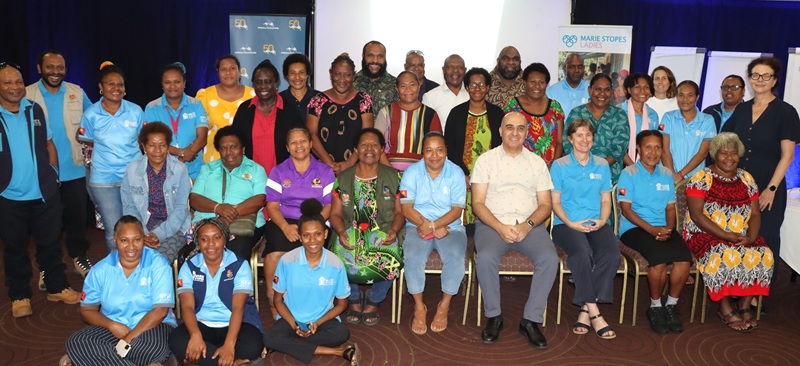
Participants reflecting on the program.
For further information, including access to related materials, please contact the Australian High Commission media team: +675 7090 0100